


Why quince is worth the trouble
Most people meet quince once, bite into it, and never bother again. Raw, it is hard as a turnip, mouth-puckeringly astringent and faintly gritty. Cook it, though, and the pale cream flesh turns a deep rose pink, the kitchen fills with a perfume somewhere between pear, honey and rosewater, and the flavour sharpens into something tart and fragrant that no apple or pear can quite imitate. It is also generous with pectin, which is why it sets into jellies and pastes almost without help.
Quince trees are long-lived and undemanding, which is why so many survive in gardens whose owners no longer know what they are. If you have inherited one, or know someone who has, autumn is your reward.
Finding and picking quince in the UK
Quince ripens from late September into November, depending on the season and the variety. Look in old gardens, allotments, churchyards and the overgrown corners of farmhouses, where trees planted decades ago have quietly outlasted the people who put them in. Common named sorts include Vranja, Meech's Prolific, Champion and Serbian Gold, though most garden trees are unnamed and just as good in the pan.
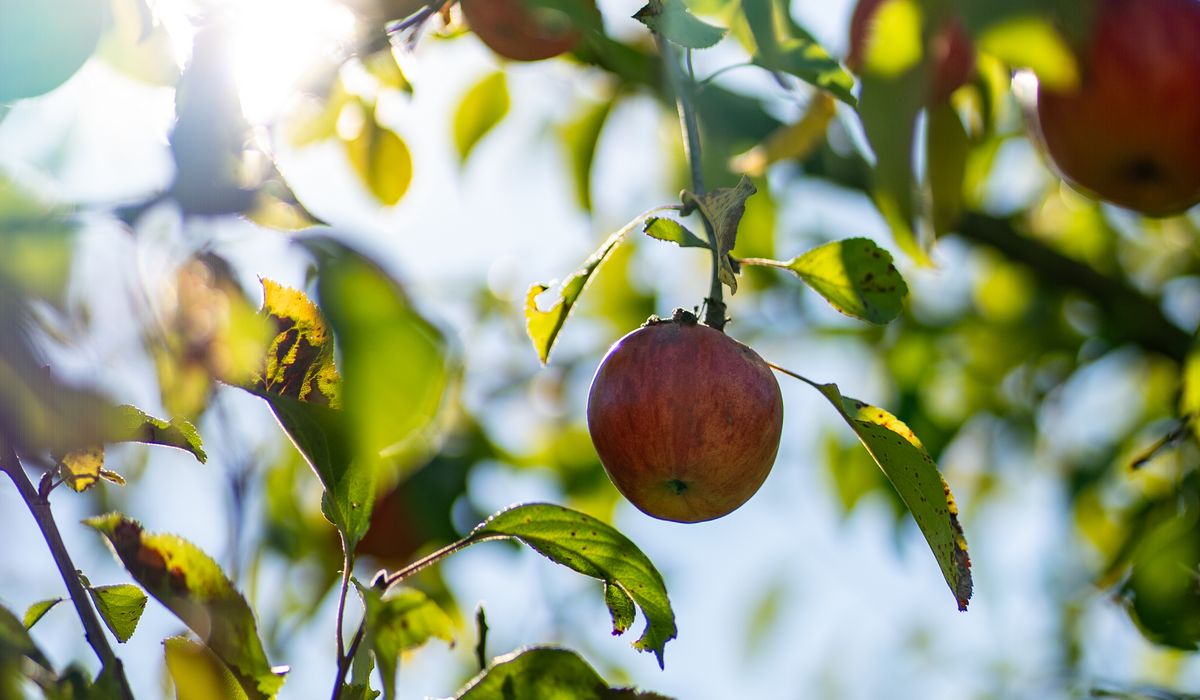
The fruit is easy to spot: large, lumpy, knobbly, somewhere between an apple and a pear, ripening from green to a warm golden yellow. Young fruit carries a grey down that rubs off to a smooth, waxy skin. A ripe quince smells sweetly floral even before you cut it, and comes away from the tree with a gentle twist.
Windfalls are perfectly usable, though bruise them and they rot quickly, so use them first. Firm green fruit will ripen on a windowsill out of direct sun; the scent tells you when it is ready. Remember the law: fruit on someone else's tree is theirs, and foraging on private land needs the landowner's permission. Ask first, and leave plenty for the birds.
Preparing quince: the honest bit
This is the part nobody warns you about. Quince flesh is dense and unyielding, so use a sharp, sturdy knife and a solid chopping board, and expect to sharpen afterwards.
- Halve, then quarter, then cut out the core. The gritty cells sit close to the centre, so cut generously around it.
- Peel thickly for poaching in pieces, or leave the skin on if the fruit is going to be sieved or blended, as the skin helps the colour develop.
- Drop cut pieces into water with a good squeeze of lemon juice as you go, or they will brown within minutes.
- Discard the seeds. They are bitter and not something to eat in quantity.
Allow about fifteen minutes of prep for a single large fruit. A kilogram of whole quince usually yields around 800g of prepared flesh.
Membrillo: the one recipe worth learning
If you make nothing else, make membrillo, the Spanish quince paste that belongs on a cheeseboard with a sharp sheep's cheese or a crumbly Lancashire.
- 1kg prepared quince, roughly chopped
- Granulated sugar, roughly the same weight as the cooked purée
- 2 tbsp lemon juice
- A strip of lemon zest or a split vanilla pod
- Water to barely cover
Simmer the fruit with the water, lemon juice and zest for 30 to 40 minutes until it collapses. Push it through a sieve or whizz it smooth, then weigh the purée and return it to a heavy pan with the same weight of sugar. Cook over a low heat, stirring often, for 1 to 1½ hours. It is ready when a spoon drawn through leaves a clean line across the base of the pan and the paste holds its shape.
Pour into a tin lined with greaseproof paper, smooth the top and leave somewhere airy for 24 to 48 hours to firm up. Cut into cubes and roll in sugar. Wrapped well, it keeps for months.
Tarts, crumbles and slow-roasted quince with honey
For a tart, poach thin slices in a syrup of sugar, water, lemon and a star anise or two for 15 to 20 minutes until just tender, then drain and lay them over sweet shortcrust pastry, alone or on a bed of frangipane. Bake at 190C for about 30 minutes.
Slow-roasting is the simplest route to something impressive. Halve the fruit, scoop out the core and sit the halves cut side up in a baking dish. Spoon honey and a knob of butter into each cavity, add a splash of water to the dish, cover with foil and roast at 180C for an hour, then uncover for another 20 to 30 minutes to caramelise. Serve with yoghurt or cream, or alongside roast pork or lamb, where quince's sharpness cuts through the fat beautifully.
In a crumble, mix quince with an equal weight of apples. On its own the flavour can be overwhelming.
Nothing wasted: jelly, syrup and storing
Peel and cores are far too good to bin. Cover them with water, simmer for 40 minutes, then strain through a muslin-lined sieve overnight without squeezing. For every 500ml of juice, add 500g of sugar and boil to setting point. You will get a blushing pink jelly that is superb with cold meats.
Keep the syrup from poaching, too, for drizzling over ice cream or into a gin and tonic. Poached quince keeps in its syrup in the fridge for a fortnight, and freezes well. Store raw fruit away from other produce, as its powerful scent travels.


Leave a reply