


Beech: The Woodland Tree with a Kitchen Secret
Beech is one of the best-loved trees in the British countryside, yet few people realise how much of it is edible. The smooth grey trunk, the low sweeping crown and the coppery leaves that hang on through winter make Fagus sylvatica easy to recognise, and once you know what you are looking at, an autumn walk can fill more than just your lungs. Beech mast — the nuts inside those small woody husks — can be roasted and eaten, ground into flour or pressed for a delicate oil. The young spring leaves bring a soft green note to salads, and the sap, gathered carefully in late winter, gives another string to the bow.
It is worth saying at the outset that beech gives slowly. Nut crops swing wildly from year to year, oil is hard-won, and the leaves are only worth picking for a fortnight or so. Treat that as part of the pleasure rather than a problem.
Identifying Beech and Choosing Your Trees
Beech grows best on well-drained chalk and limestone soils, with fine stands in the Chilterns, the Cotswolds and along the South Downs, plus countless planted trees in parks and hedgerows elsewhere. The key features to look for are:
- Bark: smooth and pale grey, often with faint horizontal lines and a slightly rippled, elephant-hide texture.
- Leaves: oval, roughly 5–10cm, with a wavy but not sharply toothed edge. They unfurl silky and pale in spring, turn glossy green in summer, then gold and copper in autumn.
- Winter leaves: young trees and hedges often hold dead copper leaves right through to spring, which is a very useful identification aid.
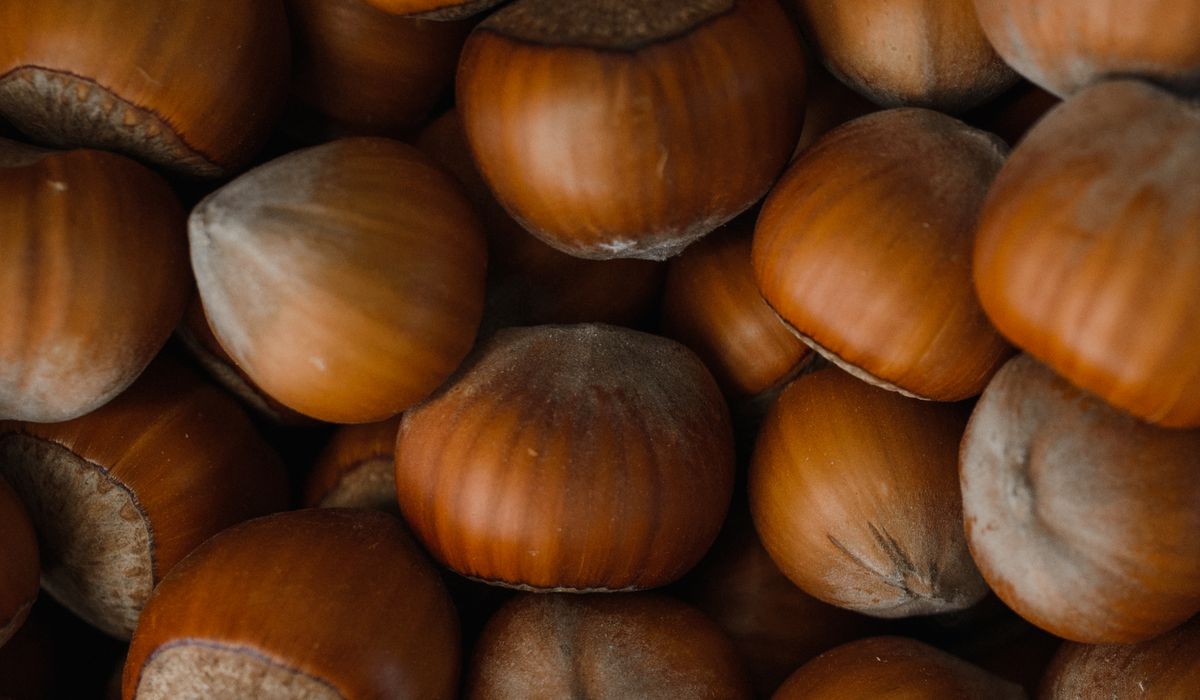
- Nuts: small, shiny brown and distinctly triangular, usually two tucked inside a four-lobed woody husk that turns brown and splits while still on the tree.
In a mast year the ground beneath a good tree will be littered with husks, so look for the evidence on the floor rather than straining your neck. Do not confuse beech with horse chestnut: conkers are round and smooth inside a spiky green case, while beech nuts are sharply three-sided. Conkers are not edible.
Gathering Beech Mast
Timing is everything. The husks begin to open in late September and the bulk of the crop usually falls through October, ahead of the first hard frosts. Gather nuts that have already dropped, or pick whole husks from lower branches where they are easy to reach; the nuts inside are ripe when the husk is brown and dry, not green.
Expect waste. Many nuts are holed by weevils or have dried to nothing inside — discard anything light, or with a small round hole in the shell. A quick check is to drop the shelled kernels into water: sound ones sink, hollow or grub-damaged ones float. Work steadily, take only what you will genuinely use, and leave a generous share behind. Jays, squirrels, mice, voles and dormice all depend on the mast to see them through winter, so never strip a tree bare.
Roasting, Grinding and Pressing
Raw beech kernels are astringent and slightly laxative, so roast them. Spread the shelled nuts on a baking tray and roast at around 150–160°C for 10–15 minutes, until the skins darken and the kitchen smells of toasted hazelnut. Tip them into a clean tea towel, rub briskly to loosen the papery skins, then winnow in front of a fan or a light breeze.
Roasted nuts are excellent eaten warm with a pinch of salt, scattered over roasted squash, or chopped into biscuits and stuffings. They also grind well: blitz them finely and use the meal to replace about a quarter of the plain flour in a shortbread or a crumble topping.
Beech oil is the connoisseur's project. The kernels are around a third oil by weight, and the cold-pressed oil is pale, nutty and lovely on a winter salad. Be warned, though, that the yields are small — think in terms of a carrier bag of shelled kernels for a small bottle — and homemade oil turns rancid quickly. Keep it in the fridge, in a dark jar, and use it within a couple of months.
Young Beech Leaves: A Short Spring Window
From late April into May, the new leaves emerge silky, translucent and lime green, and they are at their best for perhaps two or three weeks. The flavour is mild and gently lemony, with a soft spinach-like quality that sits beautifully alongside bitter leaves such as dandelion or sorrel. Tear them into a salad, tuck them into sandwiches, or blitz them into a loose green pesto with wild garlic, hazelnuts and a hard cheese.
Pick only the top few leaves from each shoot, taking one or two and moving on, so the tree keeps its growing points. Once the leaves lose their sheen and turn leathery, they become tough and slightly astringent, so stop picking and let them do their proper job.
There is also a traditional English liqueur to be made: pack young beech leaves loosely into a jar with a little sugar and cover with gin, leave for three or four weeks, then strain and filter through a coffee filter. It starts a vivid emerald green and matures to a warm amber.
Sap, Safety and Foraging Well
Beech sap can be tapped in late winter, much as birch is, but the flow is modest and the flavour is watery and only faintly sweet. It is a pleasant experiment rather than a serious harvest, and if you do tap a tree, keep the hole small and angled downwards, plug it afterwards, and only ever work a tree you have permission to use. Never tap on a nature reserve or a site of special scientific interest.
As with all foraging, know the rules and the ground you are on: you need the landowner's permission on private land, and picking is not the same as uprooting, which is illegal without consent. Avoid roadside trees and anywhere that might have been sprayed. Finally, beech pollen is a powerful allergen in spring, so keep that in mind if you suffer badly in hay fever season — and never eat anything you cannot identify with complete certainty.


Leave a reply